Bill Skarsgard expresses fatigue with villainous roles while addressing his absence from the James Bond casting conversation

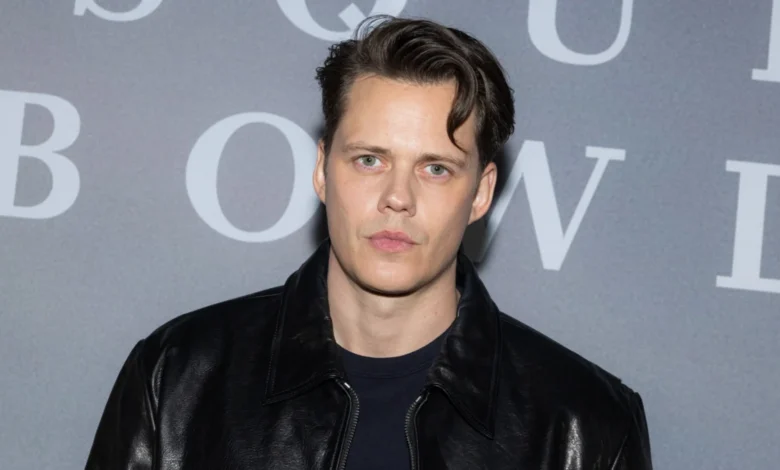
The landscape of modern cinema is heavily populated by iconic antagonists, and few actors have defined this archetype in the 21st century as effectively as Bill Skarsgard. From his chilling, transformative performance as Pennywise in the Stephen King adaptation of It to his recent turn as Count Orlok in the reimagining of Nosferatu, Skarsgard has become synonymous with the macabre and the malevolent. However, in a candid appearance on Josh Horowitz’s Happy Sad Confused podcast, the 36-year-old actor signaled a significant pivot in his career trajectory, admitting that he feels effectively spent when it comes to exploring the darker corners of human—and supernatural—nature.
This declaration arrives at a pivotal juncture in Skarsgard’s career, as he simultaneously promotes his role in Peter Berg’s war drama, The Mosquito Bowl. The juxtaposition of his recent heavy-hitting antagonist roles and his desire for professional evolution highlights a growing sentiment among character actors who risk being typecast by their own success.
The Evolution of a Screen Villain
Skarsgard’s resume over the past decade reads like a masterclass in screen villainy. His ability to inhabit roles that require extreme physical and psychological transformation has garnered critical acclaim and massive box office returns. His portrayal of the dancing clown Pennywise, in particular, set a high bar for horror performances, earning over $700 million globally for the 2017 installment of It.
Following this, his role as the Marquis Vincent Bisset de Gramont in John Wick: Chapter 4 demonstrated his ability to play a more refined, tactical, and grounded antagonist. Furthermore, his recent performance as the legendary Count Orlok in the highly anticipated Nosferatu reboot has been positioned by critics as a career-defining turn. Yet, it is precisely this intensity that has led to his current state of creative exhaustion.
"For a villain, it would have to be something that felt original to me, that was something that I hadn’t done before," Skarsgard explained during the podcast. "I feel, kind of, spent with those things. But there’s villains [that] could be really fun in different ways and if it’s the right kind."
The Bond Casting Conundrum
During the wide-ranging conversation, the discussion inevitably turned toward the most coveted vacancy in British cinema: the role of James Bond. For years, fan theories and industry speculation have placed Skarsgard in the running for a spot within the 007 universe. However, the actor revealed a surprising lack of engagement from the producers regarding the franchise.
"Yeah! Well, because they didn’t call me about James Bond. I don’t know what that was about," Skarsgard noted with a mix of irony and candor. "Maybe they were like, ‘We can’t do a Swede for this guy.’ I wasn’t even thrown into the mix."
This admission sheds light on the opaque nature of the Eon Productions casting process. As the franchise prepares to transition away from the Daniel Craig era, the pressure on producers Barbara Broccoli and Michael G. Wilson to select a successor has intensified. Skarsgard’s comments confirm that despite his high profile and proven ability to lead major tentpole films, he has not been a participant in the current cycle of negotiations.
The actor further clarified his stance on the franchise, noting that he would likely decline a long-term commitment to the lead role of 007. Given the grueling physical and promotional requirements that define a Bond tenure—which often spans over a decade—it is common for actors of his caliber to prioritize flexibility. Instead, he expressed a clear preference for a one-off villainous role, drawing inspiration from the performances of Mads Mikkelsen in Casino Royale and Javier Bardem in Skyfall. Both actors managed to leave an indelible mark on the franchise without becoming the face of the series, a trajectory that seems to align more closely with Skarsgard’s current professional goals.
The Search for 007: A Shifting Landscape
The quest for the next James Bond has become one of the most closely watched developments in Hollywood. Recent reports from The Hollywood Reporter have indicated that the search has moved into a more concrete phase, with a series of high-profile screen tests taking place.
The list of potential candidates has been fluid. Earlier reports highlighted names such as Callum Turner, Jack Lowden, and Josh O’Connor as frontrunners who had undergone the rigorous audition process. The narrative shifted significantly on Friday when it was revealed that Robert Pattinson had also been tested for the role. Additionally, Nicholas Hoult has been mentioned as a strong contender, reflecting the studio’s desire to secure a versatile performer who can balance the physicality of the role with the necessary gravitas.
The timeline for the next Bond film remains subject to the finalization of the lead actor. With Denis Villeneuve attached to the broader creative orbit of the franchise’s future, the expectation is that the next iteration of Bond will lean into a more auteur-driven aesthetic, necessitating a lead actor who can command the screen in a manner consistent with such a vision.
Professional Transition and The Mosquito Bowl
While Skarsgard may be distancing himself from the villainous archetype, he remains deeply committed to the craft of acting through more grounded, human-centric narratives. His latest project, The Mosquito Bowl, serves as a poignant departure from the horror and action genres.
Directed by Peter Berg, the film chronicles the true story of a group of professional football players who served in the Marine Corps during the Battle of Okinawa. The project has been met with critical interest, and its theatrical release, followed by a streaming debut on Netflix on November 25, marks a significant shift for Skarsgard. By taking on a role that emphasizes brotherhood, sacrifice, and historical realism, the actor is clearly attempting to broaden his portfolio and distance himself from the supernatural antagonists that have dominated his recent years.
Implications for the Industry
The "typecasting trap" is a well-documented phenomenon in Hollywood, where actors who excel at playing villains often find it difficult to transition into traditional leading man roles. Skarsgard’s public acknowledgment of his desire to pivot is a strategic move that signals to casting directors and studios that he is open to a new variety of character studies.
His candidness regarding the Bond franchise also serves as a reminder of the power dynamic between high-profile actors and legendary franchises. While fans often create "wish lists" for iconic roles, the reality of the industry involves complex considerations of nationality, marketability, and long-term contractual obligations.
As the film industry continues to grapple with the demand for recognizable intellectual property (IP) versus the need for fresh, original storytelling, actors like Skarsgard occupy a unique space. They are the faces of the blockbuster machines that keep theaters profitable, yet they are also individuals seeking the longevity that comes from diverse, challenging, and meaningful performances.
Ultimately, whether or not Skarsgard ever finds his way into the James Bond universe as a recurring antagonist, his decision to reevaluate his path suggests a maturing artistic vision. By stepping away from the shadows of Pennywise and Orlok, he is creating the space necessary to redefine his legacy, moving from a master of onscreen terror to an actor of broader, more nuanced range. As the industry looks forward to the next generation of cinema, his transition will be a key storyline to watch, reflecting the broader evolution of talent management in an era where the lines between genre cinema and prestige drama continue to blur.